We might not have all the answers but we welcome all questions. Please reach out to us with media inquiries, questions about membership or non-political partnership, ideas or requests. We look forward to hearing from you in any of the official Swiss languages or English.
Become a Member or non-political partner.
Do you have any further questions around becoming a digitalswitzerland member or a non-political partner of our foundation? We are happy to have a conversation with you about our offerings.
Newsletter
Get the latest digital thinking direct to your inbox. Join more than 14,000 fellow digital enthusiasts for our regular round-up of the latest news, project updates and ideas to inspire.
Download document
After subscribing to our newsletter you can download the document.
Nicolas Bürer, Managing Director digitalswitzerland discusses topics with leaders in Switzerland from the fields of technology and innovation.
Digital transformation is here to stay. We must therefore constantly foster dialogue to increase awareness for all that is and will become digital. Digitalisation brings not only opportunities, but also risks that need to be addressed and taken seriously. In my series “Dialogue Interviews” I discuss these topics with leaders in Switzerland, from our member organisations to digital shapers and the brightest minds in the fields of technology and innovation.
In this edition, I talked to Philipp Metzger, Director General of the Federal Office of Communications (OFCOM).
Nicolas: Mr. Metzger, you have been Director General of the OFCOM since 2014 and lead the Swiss Government’s Digital Switzerland Strategy and Digital Action Plan. In February 2020, you’re moving on to take up a new professional challenge. Before you go, please would you share some insights into the progress of the initiative in the first two years since it was launched?
Mr. Metzger: The national ‘Digital Switzerland’ conference, which was organised by the Swiss Confederation, took place on 2 September 2019 in Basel and discussed many of our achievement so far. It was also a chance to take stock of where we stand and consider where we’re heading.
In his opening speech, Ueli Maurer, President of the Swiss Confederation, emphasised Switzerland’s leading position in fintech and blockchain, thanks to our forward-looking regulation. He set this as a benchmark for future endeavours. He also noted the creation of the Cyber Security Center and the appointment of a Cyber Security Delegate, while acknowledging that a lot remains to be done in this area to increase confidence in digitalisation in Switzerland. Federal Councillor Simonetta Sommaruga focused on the package of measures to support the media sector, especially online media, which will be submitted to Parliament in 2020. We need to redefine the framework conditions to enable the media to continue to play their pivotal role in our democracy as our environment becomes increasingly digital.
Nicolas: And what are some of the highlights so far, in your view?
One highlight in the implementation of the strategy has to be the analysis led by the State Secretariat for Education, Research and Innovation in the field of artificial intelligence. The results of this work are expected to be available before the end of 2019 and will include consideration of measures to be undertaken in this area.
Elsewhere, the State Secretariat for Economic Affairs (SECO) is evaluating legislation relevant to economic policy to identify provisions that unnecessarily hamper digitalisation, or that are redundant as a result of digital development. Having surveyed a broad range of business associations, trade unions, companies and consumer protection organisations in the context of a ‘Digital Test’ survey, SECO has found that legal requirements hinder a wide range of transactions in a digital business environment. These requirements will now be reviewed and revised with a view to facilitating the further development of the digital economy.
Last but not least, the Federal Department of Foreign Affairs has launched the digital self-determination network. Its aim is to examine the social, legal, regulatory and technical prerequisites to strengthen people’s digital self-determination. As far as possible, citizens should be able to decide for themselves who may use their data and for what purpose. A first use case in the field of mobility should demonstrate how the different actors organise their cooperation in order to ensure a free, self-determined and trustworthy data exchange between all participants.
Nicolas: The IMD Worldwide Digital Competitiveness Index ranks Switzerland at number 37 in terms of e-participation and 36 for starting a business. Both domains depend on the Swiss government and the cantons. What can we do to improve our position in the next 2-3 years?
Mr. Metzger: The IMD World Digital Competitiveness Index 2019 measures e-participation in terms of governments’ use of online services to facilitate provision of information to citizens (e-government), interaction with stakeholders (e-consultation), and engagement in decision-making processes (e-voting).
In e-government, various measures are currently being taken in Switzerland to further develop the system. In a shared project, stakeholders are currently working on solutions to help the Confederation, the cantons and the municipalities manage and coordinate their digitalisation activities, initiatives and projects more effectively. The current structures are not designed to meet the requirements of a digital society (changing demands in society, competition between locations, speed, etc.). This contributes to increasingly complex and inefficient coordination and control of digital activities. In addition, the Federal Chancellery is in the process of preparing a report on compliance with procedural requests from Parliament regarding more efficient consultation procedures and the opportunities of civic tech. Furthermore, the Federal Council wants to promote participation and innovation by publishing the data of the federal offices; this would make administrative data freely available to the economy for use in applications such as the creation of new business models. The use of open administrative data is the main objective of the second Open Government Data Strategy (2019 – 2023) adopted by the Federal Council in November 2018.
The Federal Council has also taken an important decision in the area of e-voting. It has commissioned the Federal Chancellery to work with the cantons by the end of 2020 to devise a reorientation of the trial operation and to present it in a report.
As for start-ups, there is progress with regard to the financing aspect. According to the Swiss Venture Capital Report, the capital invested has quadrupled since 2012 and so have the financing rounds for Swiss start-ups. The areas with the most investment are ICT solutions for the business sector and life sciences. In fintech, Switzerland is a leader. The Global Entrepreneurship Monitor, which has been investigating entrepreneurial activities and their impact on national economies worldwide for twenty years, also shows good framework conditions for start-ups in Switzerland (Switzerland is ranked third after the USA and the Netherlands). There is scope, though, to better exploit potential in terms of entrepreneurial activity.
Nicolas: As general question, in which digital and innovation areas do you see Switzerland having a leading position worldwide in 3-5 years?
Mr. Metzger: Switzerland will continue to lead in the areas of fintech and blockchain by promoting digitalisation of the financial sector with appropriate regulation. In December 2018, the Federal Council adopted a report by the State Secretariat for International Finance SIF on the legal framework for blockchain and distributed ledger technology (DLT) in the financial sector. The emphasis is on creating the best possible framework conditions so that Switzerland can establish and further develop its position as a leading, innovative and sustainable location for fintech and DLT companies. Healthcare is another area in which Switzerland could blaze a trail in the future – if we succeed in making optimum use of the advantages of new technologies, artificial intelligence and robotics. This includes rapid automated collection of health-relevant information, extracting new insights from the systematic evaluation of this information and making treatment-relevant information available at the right time and place.
Analysis and measures to secure the digital supply chain
The internet is connecting people and machines more and more and has already made a lasting difference to our lives. While the integrity and safety of products from traditional sectors are inspected for certain issues prior to market approval (e.g. in the areas of mobility, food, medicines, etc.), the quality and safety of many digital products is not assured. There are various reasons for this. Today’s supply chain security for digital products is often inadequate and undermines the existing security measures. Also, decision-makers are often unable to make sustainable decisions due to a lack of well-founded and transparent information. As digitalisation progresses, ignorance concerning the level of security of the products used can lead to critical threats. If incompletely tested products are used in critical infrastructures, threats may be widespread and endanger the provision to society in the areas of electricity, medicine, mobility and physical protection. These risks are abstract, have developed slowly and, consequently, were ignored for a long time and continually accumulated until now.
The Supply Chain Security working group analyses how technological risks are dealt with in other sectors (e.g. electricity supply) and, based on this, identifies and documents the measures that are needed for secure digitalisation. The following topics are addressed, among others:
What are the biggest risks of the digital society and where do they lie?
What do critical attack scenarios look like and who are the attackers?
What can and must we – as an industry or as society in general – consider or undertake right away?
What measures are necessary and helpful to secure the digital supply chain?
As a society, we have a duty to prevent known and avoidable mistakes so that now and in the future the opportunities offered by digitalisation outweigh the risks.
On 2 September, a big initiative with even bigger ambitions was launched in Geneva: At the first Swiss Global Digital Summit top representatives from globally active companies, from science and renowned international organisations kicked off the Swiss Digital Initiative (SDI). The initiative is aimed at a long-term and sustainable process with the objective of ensuring ethical standards in the digital world.
Swiss Digital Initiative 2019
With the debate around “Cambridge Analytica”, the 2016 US elections and the fake news controversies, governments, societies and the business community urgently need to reflect on how to ensure trustworthy technologies and set ethical boundaries. Despite the best intentions, data-driven applications and algorithmic processes have the capacity to cause unintentional harm and may affect human rights, individual autonomy, competitive market order, financial stability, democratic processes, and national sovereignty. In addition, they can increase inequality and shift control away from humans to algorithms.
The deep transformation of our society triggered by these applications has the potential to undermine trust between citizens, companies, and governments. That is why digitalswitzerland initiated the Swiss Digital Initiative (SDI) under the patronage of Federal President Ueli Maurer and with Doris Leuthard, former Swiss federal councillor, as chairwoman of the SDI Foundation.
Objectives of the Swiss Digital Initiative
Prior to the Swiss Global Digital Summit, a policy paper was drafted upon advice from an autonomous and high-ranking group of experts from Swiss universities. General tenor: Digitization must always serve people and place their needs at the centre. The joint statement sets the basis for a common understanding. Based on this statement, the objectives of the initiative can be summarized as follows:
Ensuring ethical standards in the digital world
Fostering technology’s potential to advance flourishing human societies
Focusing on ethical values and principles in action
Developing specific and action-oriented projects that will contribute to a global dialogue on the ethics of digitalisation, and aim to foster trust in digital technologies, as well as in the actors involved in the ongoing process of digital transformation
The SDI is primarily, but not exclusively, aimed at companies with a global presence
The first Swiss Global Digital Summit in Geneva
The starting point of the Swiss Digital Initiative consisted of the Swiss Global Digital Summit on 2 September 2019. The aim was to gather national and international decision-makers to address and discuss ethical implications of new technologies.
The Swiss Global Digital Summit was opened by digitalswitzerland founder Marc Walder. He highlighted the growing international consensus on five leading ethical principles for today’s digital world: transparency, justice, fairness, responsibility and privacy. The SDI builds upon this international consensus. Walder’s introduction was followed by a welcome speech from Federal President Ueli Maurer and three short keynotes. The main part of the summit consisted of an interactive discussion between participants.
It’s all about trust
All disruptive technologies and legislation fall short if trust is not guaranteed. People choose services and providers because they trust them. If businesses want to be successful in the long run, they must live up to their societal responsibility. Politics need to set framework conditions to make sure that trust can grow.
It’s all about data
Every minute, huge amounts of data are collected and processed. This raises questions about the right and legitimate way to use this data, ownership and access to data, and the relationship between business, government and citizens. The potential of big data is huge, for example in the research or health care sectors. Therefore, transparency is needed on how data is collected and processed. Data privacy and ownership are key.
International governance needed
Discussions revolved around questions such as how to ensure inclusive artificial intelligence, how to augment, not replace, human intelligence or how to fight hate speech. Common international guidelines and governance do not exist yet, but are urgently needed.
Geneva – home to the future SDI Foundation
Selecting Geneva as a headquarter for the SDI is not a coincidence. The city is home to more than 37 international organisations, 1’400 members of international bodies, 2’700 members of non-governmental organisations, 4’000 members of permanent missions. It is at the heart of multilateral diplomacy and international cooperation. Geneva is poised to become the center of digital ethics and Switzerland, a role model on how to tackle challenges and questions around digitalisation. The ambition of the Swiss Digital Initiative should be nothing less than becoming the international reference initiative for ethics and digitalisation.
Just another initiative?
In the fields of ethics and digitalisation, many words have already been said and written. Policy-papers and recommendations, declarations, guidelines, studies etc. exist. Existing initiatives such as the Paris Call, the Tech Accord or the WEF Centre for the Fourth Industrial Revolution tackle similar issues. So why another initiative?
We are convinced – and the feedback and reactions at the launch of the initiative have only strengthened this conviction – that the SDI comes at exactly the right time and place. We do not want to launch just another initiative or reinvent the wheel. Rather, the SDI builds on the numerous initiatives and statements released by states, international organisations, as well as the private sector. The SDI seeks to amplify their impact by contributing to the operationalization of the principles put forth in these documents (e.g. the UN Secretary-General’s High-level Panel report on digital cooperation entitled “The Age of Global Interdependence”, the EU Guidelines for Trustworthy AI, the recent OECD Recommendation on Artificial Intelligence), but also the many recent Swiss documents commissioned by the Federal Government and non-state actors.
The SDI intends to work together with existing initiatives and institutions, to make use of synergies by closing gaps and adding missing dots.
Ensuring ethical guidelines in the digital age is a joint-effort
In the next phase, concrete projects will be created in a collaborative process. These could include projects like the development of a transparency label. Further, the foundation as the sponsor of the Swiss Digital Initiative, will officially be established. The next milestone will be at the 2020 WEF Annual Meeting. The aim is that key actors officially commit to the implementation of concrete projects, which tangibly operationalize ethical standards. The approach is based on the conviction that the ethical challenges of digitalisation must be met by joining forces with diverse stakeholders and initiatives from private, public-private or fully public sectors.
As Federal President Ueli Maurer stated at the beginning of the Swiss Global Digital Summit: «We are coming together to think about ethics and fairness – big words that we want to fill with action.» Going from theory to practice, from words to concrete action will be a challenge. Yet, we are convinced this is the right direction to take and we look forward to present the first fruits in Davos at WEF 2020.
For more information, you can find the official press release here.
The best, and really the only place to start a conversation about my work is to explain some of the values I hold most closely, which are fundamental to every project I undertake. Here are just a few:
Identity is a fundamental human right
As the world becomes more digital, we face threats like the commodification of personal data, cybersecurity risks, and privacy concerns
Though technology opens us up to risks and can be used to cause harm, harnessed properly, the capacity for it to do good outweighs the negatives.
The translation of these values is visible in many places, but perhaps most fundamentally in my work with blockchain technologies. Blockchain allows the storage of information through systems that embody two essential characteristics: transparency and immutability.
Think about how many things in your life require proof of identity. Just consider dealing with the healthcare system, the financial system, employment opportunities, the education system, and much more. Identifying documents are also necessary to prove credentials, whether it’s a license to operate a motor vehicle, to open a business, or to practice law and medicine. The necessity of immutability here is self-explanatory. You do not want this fundamental information to be susceptible to alteration, either by the owner in an attempt to engage in some sort of fraud, or by an outside, predatory party.
The second quality, transparency, is what allows us to ensure the validity and utility of this information. To be clear, transparency does not mean a lack of security. It means that the information can be shared, when and how the owner chooses to. Moreover, it is intrinsically related to immutability. The fact that the information cannot be changed guarantees the transparency of the party offering the data or information. Blockchain allows us to create a system that is, by upholding these two essential qualities, fully secure and able to protect personal data.
The protection of individual identity is not the only application for technology like this. Through my work with Syniverse, we are creating a system that provides a single source of truth in clearing and settling processes, enabling not only trust and security in all transactions but efficient and fair dispute resolutions. The applications for use in other transparent public transactions are limitless.
Also, along with Syniverse, we are working on ways to allow for transparency without disclosure through Zero-Knowledge Proofs. Many of us have likely been in a situation where some third party has shared a secret, and each of the initial two parties are dancing around the topic trying to see whether or not they will be betraying a confidence by discussing what they know. A zero-knowledge proof is a way out of that situation: it’s a way to prove to the other party that you know something without having to disclose that you know it. The impact of such potential, of course, extends far beyond attempts to avoid spreading gossip.
All of this is just the tip of the iceberg when it comes to the potential for blockchain, and I’m excited to see where we will take it next.
Ivan Bütler has made it his business to hack into companies. Whether under the guise of a printer technician or with an e-mail from a schoolmate, so far he has always managed to get in. He will carry out live hacks on Digital Day 2019 in Zurich’s main station. Read more here about what to expect and much more.
Who are you?
I’m Ivan Bütler, the founder and one of the managing directors of Compass Security. We look for weak spots in operators’ websites, in e-banking, trading systems, voting systems, remote access, Android, Mac and iPhone. We are, if you will, the good-guy hackers. I set up the company with my colleague Walter Sprenger. We started out small and were able to expand very quickly; in the meantime we have offices in Bern, Zurich, Berlin and, since last December, in Toronto.
Why do people hack in the first place?
There are various motives for hackers and then different sub-categories. I personally like the following breakdown into four groups the best.
The script kiddies. They upload their propaganda and other content onto third-party websites. This is irritating in particular for Swiss SMEs.
The economic criminals –again, they can be broken down into, let’s say, the “Stupid” and the “Smart”. The stupid ones use their knowledge to access an e-banking user and to transfer money to another account. This is stupid because usually not much money is involved and secondly because it’s easy to trace. The smart ones, on the other hand, acquire stock market information from global players and use it for insider trading before the rest of the world notices.
The anonymous ones –these are people who access websites for ethical or moral reasons to spread their message. One example is PostFinance, whose website was paralysed as revenge, because they had deactivated the account of Julian Assange from Wikileaks.
The fourth group engages in espionage and this affects secret services. As Julian Assange showed with his disclosures, the USA has a global network and can monitor everyone. This is the threat we are least able to protect ourselves against –we are really helpless against state players.
If you see all of this, do you still trust the Internet?
Can I answer the question with a question? Do you drive a car? And you know that it has safety belts and airbags and so on, because an accident might happen? But you carry on driving anyway? So that’s what it’s like for me and the Internet. I’m aware of the risks and that you’re never safe despite taking every precaution. But I still use it because of the many advantages it offers.
Have you ever failed with a mandate?
I’d really rather not say, but so far there has been virtually no company we couldn’t hack. The problem is always people: If just one out of a hundred doesn’t pay attention, you can get in to the system. Even if the employees are warned and are careful. For example, we had a case where we were supposed to hack a company and one person volunteered to be the test person. We then Googled this person and found out that she is registered on a website where you can find former classmates. We set up a g-mail account in the name of a former classmate and wrote to her: “Hello, I’m organising a class reunion; I’ve already put the addresses I knew in the attached Excel file. Could you complete the list?” As soon as she opened the attachment, the Trojan was already on her computer.
Ivan Bütler at Digital Day
Ivan Bütler will carry out live hacks at Digital Day on 3 September in Zurich; he will use a number of examples to show how easy it is to access other people’s data and will provide helpful tips. If you cannot attend in person you can watch here on live stream and ask questions.
It is hard to find a cluster of technologies that might change our societies more in the coming decades than artificial intelligence. These technologies can be a force of good (see for example the AI for Good Global Summit), but also carry many risks ranging from algorithmic bias to laying the foundation for surveillance states, supporting automated warfare and so on.
To grapple with some of these opportunities and risks, more than 20 countries have formulated AI policies in the past two years. Interestingly enough, Switzerland is one of the few western countries that have not. In addition, several international fora (including the UN, EU, G7, and OECD) are drafting or have published “principles and guidelines” for an ethical trajectory of a future with AI.
Studying these documents, we see some overlap of shared principles. A curious case in point is the principle of “inclusion”. It is important, because AI has the potential to heighten inequities on many levels: between corporations, governments and citizens, between people with access technology and those without, between richer and poorer countries, etc. Inclusion – be it in research, development, deployment and governance – should soften some of these effects.
For example, the newly published Ethics guidelines for trustworthy AI by the European Commission states that “we must enable inclusion and diversity throughout the entire AI system’s life cycle” and mentions as stakeholders all “those involved in making the products, the users, and other impacted groups”, including “society at large”. The “Charlevoix common vision for the future of AI” issued by G7 leaders speaks of “involving women, underrepresented populations and marginalized individuals as creators, stakeholders, leaders and decision-makers at all stages of the development and implementation of AI applications”. The OECD will publish its principles and guidelines in spring 2019 with chapters on “inclusive growth” and “fairness”.
We see this principle also in documents in the civil society space: The Asilomar Principles, the Toronto Declaration, and the Montreal Declaration, for example, put a heavy focus on inclusiveness. Even in industry documents we find the principle, albeit a bit softened: Microsoft makes it a central notion of its AI principles, while Baidu emphasizes “equal access” and Google simply commits to “working with different stakeholders”. The 8 tenets of the Partnership on AI (a platform for over 80 industry leaders and non-profits in the AI sector) include “actively engaging stakeholders” and “striving to understand and respect the interests of all parties that may be impacted by AI advances”.
Is this enough for an inclusive future of artificial intelligence? Probably not, because despite the prevalence of the principle in all these documents, there is very little clarity on what inclusion actually means, how it should be operationalised, who should be included when, where and by whom. Given the global scale and fast pace of technological development, these questions may determine the trajectory of humanity. Without clear operational guidelines and enforcement mechanisms, all these principles will remain lofty visions without practical significance.
There is thus an urgent need for concrete ideas on how to operationalize the principle of inclusion in practice. foraus, swissnex and AI Commons have initiated a global ideation campaign on this topic: making use of the policy innovation platform Policy Kitchen and initiating workshops in eleven different countries on four continents with people of different backgrounds, we are collecting concrete ideas for initiatives, models and policies to realise this principle in practice. The best ideas will be integrated at the AI for Good Global Summit and pushed to decision makers in governments, international organisations, industry and civil society. You can contribute your ideas here: policykitchen.com/inclusiveai.
Jonas Nakonz is a member of the Swiss Forum on Foreign Policy (foraus).
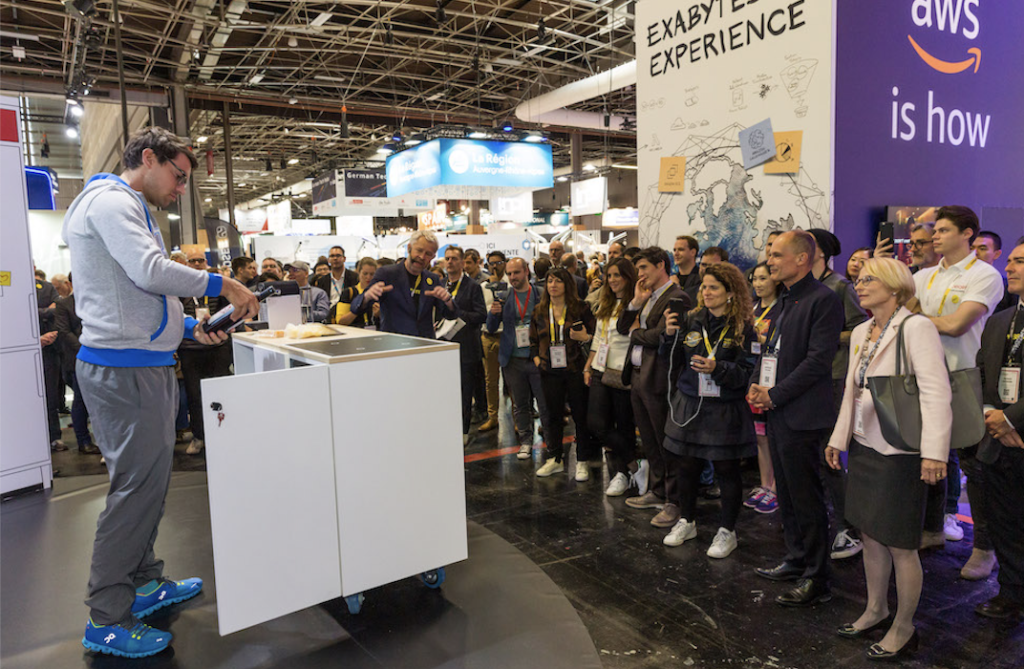
Last week, VivaTech was the place to be. Techies, geeks, startupers and entrepreneurs from all over the world flocked to Paris. During three days, the city celebrated innovation and the future of tech. Because real-life connections and human exchanges will never be entirely replaced by the digital space. Putting people at the center was a leitmotif for this year’s summit and topics such as Tech4Good and United Tech for Europe were on the programme. Where the «crème de la crème» of technology meets, Switzerland is never far. This year, Présence Suisse showcased #SwissTech at the SWISS Pavilion. Switzerland Global Enterprise (S-GE), swissnex, innosuisse and digitalswitzerland were partners. Here are some of our impressions from Paris.
By loading the tweet, you agree to Twitter’s privacy policy. Learn more
To demonstrate how technologies are increasingly shaping our everyday lives, this year’s SWISS Pavilion focused on “smart living”. On stage, a young couple, Heidi (what else) and Guillaume, portrayed their everyday struggles. From opening bottles to training for a marathon, sleeping and making babies – Swiss technology offers solutions for an easier and more convenient life.
The startups which created these innovative solutions were also present at the SWISS Pavilion. Talking to them was exciting and inspiring. For them, being at VivaTech and connecting with potential partners, investors and customers was a tremendous opportunity. As Swiss startups compete with hundreds of thousands of other international startups, they need visibility and especially access to the right connections and finances as fast as possible.
Making magic happen
In the buzz of the enormous Viva Tech summit, there are a few outstanding new technologies and startups. One that impressed us most was the Swiss startup Twiice. They developed a lower-limb exoskeleton that can help paraplegics walk again. Handcycling champion and former acrobat Silke Pan demonstrated how the Exoskeleton works. She told her very personal story and how through the new possibilities of technology, she dared to dream again: «I dreamed of finding my body back.» This is where technology changes everything and truly adds value. Tristan Vouga, co-founder of Twiice, made the point that Switzerland must be visionary in research to advance technology for the benefit of humanity.
By loading the video, you agree to YouTube’s privacy policy. Learn more
nother highlight at Vivatech was the presence of the four-legged robot ANYmal, developed by ETH Zurich for use in difficult terrain and during catastrophes and rescue operations.
By loading the video, you agree to YouTube’s privacy policy. Learn more
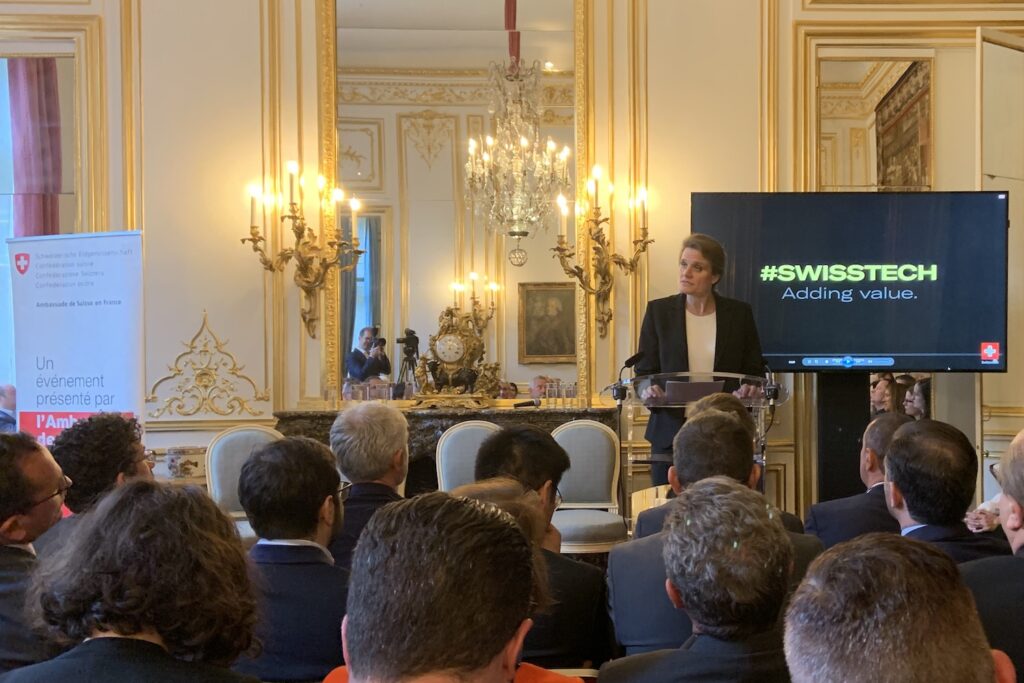
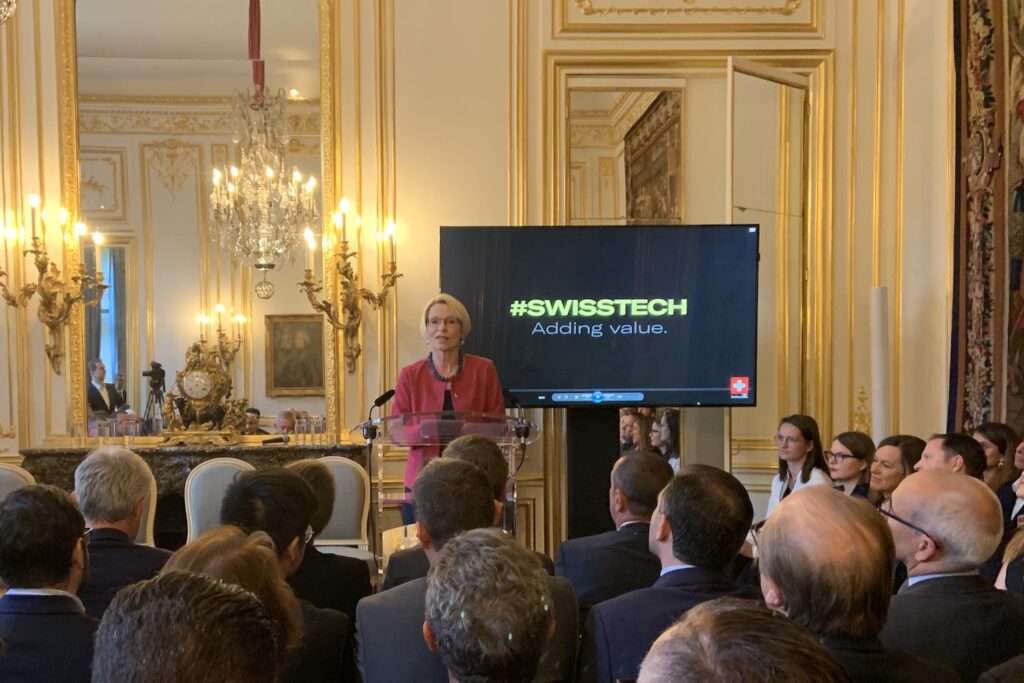
One highlight of the VivaTech conference was – at least from a Swiss perspective – an evening at the Swiss Embassy, hosted by Swiss Ambassador to France, Livia Leu. Secretary of State for Education, Research and Innovation, Martina Hirayama, introduced the evening by summarizing key-factors for Swiss innovation:
A quality education system
Close collaboration with academia
Industry framework conditions that allow innovative actors to flourish
ETH President Joël Mesot, Solar Impulse visionary Bertrand Piccard and our very own Head of Suisse Romande, Sébastien Kulling contributed to a panel discussion about the Swiss innovation ecosystem and the place of Switzerland in a competitive international environment.
Why do a project such as Solar Impulse in Switzerland and not somewhere else? Betrand Piccard thinks that on the one hand, the Swiss have a dedication to work. And maybe because Switzerland is a small country, its inhabitants want to demonstrate that they are capable of major projects. He added: «What fascinates me in Switzerland is that technology is put to the service of quality of life and human beings. And it arouses passions!» Joël Mesot underlined the importance of research. Swiss technologies are everywhere, even in our chocolate, he said with a wink. However, there is still room for improvement and some professions and industries are less digitalised today, such as those of lawyers and medical doctors. And especially the SMEs need to catch up, pointed out Sébastien Kulling who also commented “Vivatech is a fabulous environment to showcase what Switzerland is all about: technology centred around human needs and a respect for its environment.”
Ingredients for the (tech-) future
In conclusion, VivaTech is definitely worth a visit. With around 124’000 visitors from 125 countries, 13’000 startups, 3’300 investors and 2’500 journalists in three days, high-level speakers like French President Emmanuel Macron, Canada’s Prime Minister Justin Trudeau and Alibaba founder Jack Ma, the summit is almost overwhelming, capturing all the senses with sounds, talks, images and movement. Big players such as Google and Facebook were present, as well as hundreds of smaller, creative and innovative startups from all over the world. With above all, the promise of a better future thanks to new technologies.
Another two points stand out.
First, even though “Women in Tech” was a major agenda point during this year’s summit and gender parity was promoted through various activities, the IT and startup sector still appears very male-dominated. For a progressive tech future, a shift of mindset is needed. Today, (gender-) diversity is not just a nice-to-have but a prerequisite for successful organisations in an increasingly complex and interconnected world.
Second, it becomes evermore clear that for a sustainable use of new technologies, critical scrutiny of the societal impact of new technologies is necessary. “Putting people at the center” should not remain a marketing slogan, but truly trigger a deeper reflection on what new technologies mean for our everyday lives – how we communicate, live, work and travel. Only in this way will the number of arbitrary decisions diminish and lead to greater societal acceptance. A first step towards this goal is the Swiss Digital Day, which will take place for the 3rd time on 3 September 2019: A “smaller Vivatech” in all regions of Switzerland – but for the people.
Digitalisation not only creates a myriad of new opportunities, technologies and business solutions, it can sometimes also enable criminal activity that harms businesses and individuals alike. According to Cybersecurity Ventures, the total cost of cyber fraud will exceed $ 6 trillion by 2021, with stolen passwords and pin codes making up more than 80% of that amount. One promising way to prevent cyber fraud, in particular identity theft, is to rely on strong authentication software products. Using technologies that are at the forefront of digital innovation, such as 3D facial and 3D graphical authentication solutions, can reliably verify who you are, what you know and what you have.
In no other field is it more important to focus on data privacy than in the authentication process. That is why Switzerland is an excellent breeding ground for companies in this sector. The Swiss company OneVisage, for example, does not monetise users’ data, but works in line with the European General Data Protection Regulation (GDPR). It operates in an important and fast-growing market, in which a lot of companies usually focus on quick success. OneVisage offers a different path with Swiss-grade solutions that strongly protect individuals and their data.
The market is rapidly adopting facial authentication technology thanks to big, disruptive companies like Airbnb and Uber, who use it to verify users on their platforms. With such companies pushing the technology into the mainstream, cost-effective, versatile, highly secure and universal solutions that provide a good user experience and put a strong emphasis on data protection are needed more than ever.
OneVisage focuses on protecting individuals in mid-high value transactions by venturing away from pin codes. Pin codes can be easily stolen and make up a large part of online fraud with important financial consequences. Even a big company like Apple with its service FaceID is not completely secure: if the service fails to recognize a user, the user is prompted to enter a 4 to 6 digit pin code, which is a backdoor to any potential fraudster.
The main challenge is to provide an all-in-one-solution, which is technically challenging to achieve. Different devices come with different platforms, operating systems, sensors and features, so no one should be fooled by marketing campaigns from that claim to have it all figured out. Finding such a solution is a marathon, not a sprint and slowly but steadily reaching intermediate goals will prove more effective over the long term.
At Viva Technology in Paris and Money2020 Europe in Amsterdam, OneVisage will unveil PremierID, which is a 3FA solution excluding passwords and pin codes. This 3D facial biometric solution is ported on a Windows 10 platform and uses a 3D camera: a very important step to make it as accessible as possible. The next step is to port the technology on Linux and embed systems to make it truly universal and inter-operable.
Most people’s perception of facial authentication technology is negative and a company like OneVisage aims to change this. Protecting yourself from identity theft is difficult, and facial technology makes it almost impossible for fraudsters and thieves to succeed. It also makes it easier to verify identities by law enforcement and border control, which can result in faster and more efficient immigration processes. For now, fingerprint recognition is most widely used, but it can easily be replicated as we leave our fingerprints on many objects in our day-to-day lives. A data and privacy protective facial authentication solution is more secure, more efficient and better suited for the digitised world of the 21st century. There is really no reason not to use facial authentication technology; especially if it’s coming from Switzerland.
Article by Christophe Remillet, CEO OneVisage.
We are happy to share a guest blog from one of our Digital Day partner organizations, Isabelle Vautravers from Sanitas Health Insurance Foundation, addressing one of the Digital Day themes: My Data
Fitness apps, health trackers, nutrition programs: in recent years, the ways of collecting, evaluating and comparing personal data have virtually exploded. How does this influence our behaviour and what does it mean for social cohesion? A Swiss survey shows astonishing results.
Half the adults in Switzerland track their activities and statuses on smartphones or other portable devices. Two out of three respondents feel this does not go far enough: they would like more data collected automatically – as long as this is not done by a third party. Though 70 percent of respondents use free email and instant messaging services, only 14 percent think it’s okay for their data to be used in exchange for these free services. These results come from a survey of the Swiss population conducted by the Sotomo Research Centre on behalf of the Sanitas Foundation.
Despite the openness towards digital data collection, respondents view critically the social consequences of digitalisation. You can see this through the buzzwords they selected in this context: from the suggested options, the terms they most frequently chose were “control and surveillance”, followed by “loss of individuality”.
Six out of ten respondents believe that the advancing collection of digital data has a negative impact on solidarity in our society. They associate a world of data collecting with control, efficiency and pressure to perform. For them, this puts solidarity and personal responsibility under pressure. Countermeasures should be established to strengthen the community and personal responsibility. Most believe that neither the state nor companies are ultimately responsible for these countermeasures, but that responsibility lies with each individual.
The Sanitas Health Insurance Foundation works on important social issues in the fields of insurance, health and digitalisation. The debate should not only be led by experts, politicians and business representatives, but include the voice of the public. To achieve greater inclusion, the Foundation has initiated a series of surveys in collaboration with the Sotomo Research Centre to ask the Swiss public about digital data collection in their daily activities.
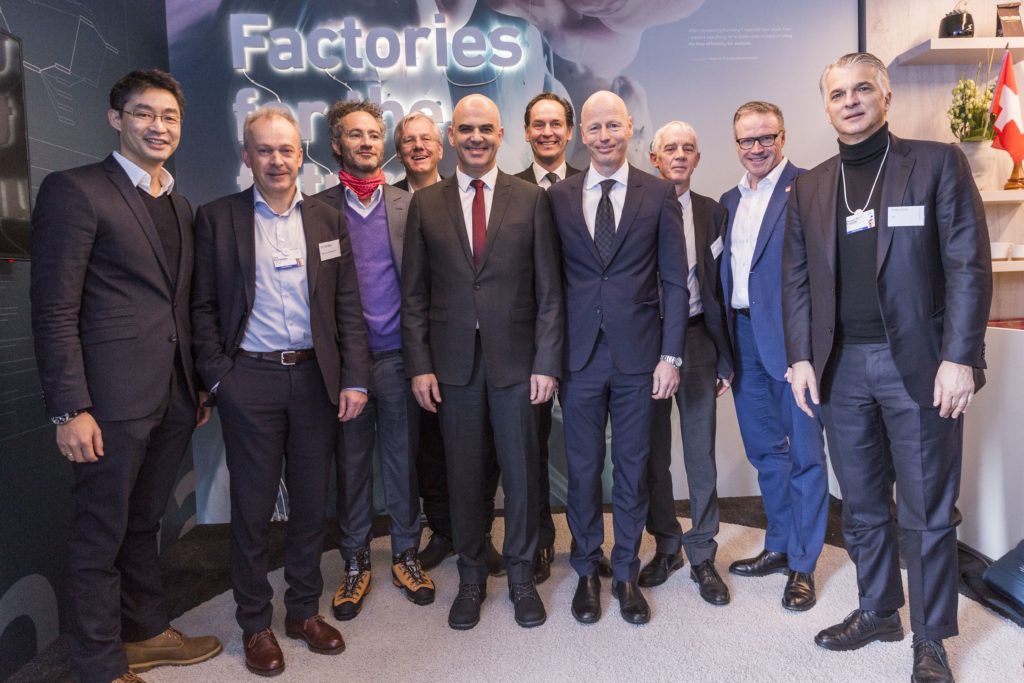
The early bird catches the worm! This saying was particularly true on Wednesday, 24 January 2018. digitalswitzerland organized a high-level panel discussion and breakfast on the topic: «Switzerland, the world’s most innovative country at the intersection of technological innovation and social acceptance.» At the panel in the Palantir Pavillon in Davos discussed early risers Alain Berset, President of the Swiss Confederation, Alexander Karp, CEO and co-founder of Palantir, Philipp Rösler, former managing director of WEF and Marc Walder, CEO of Ringier and initiator of digitalswitzerland. The digitalswitzerland-breakfast was attended by many C-Level members of digitalswitzerland.
From left to right: Philipp Rösler (Former MD WEF), Urs Schäppi (CEO Swisscom), Alexander Karp (Co-Founder and CEO Palantir), Christoph Franz (Chairman Roche), Alain Berset (Federal President), Patrick Warnking (CEO Google), Marc Walder (CEO Ringier and Initiator digitalswitzerland), Martin Vetterli (President EPFL), Andreas Meyer (CEO SBB), Sergio Ermotti (CEO UBS) Photo Credit: Schweizer Illustrierte
The world’s most innovative country between technological innovation and social acceptance
After a short introduction of Alexander Karp, where he talked about the journey of Palantir technologies and hippie times, he addressed the issue of data. According to Karp the big challenge is the question of who controls data ownership. What happens with our data should not be decided in Silicon Valley, he believes. Instead the state should make the final decision regarding data ownership, privacy and ethical questions. Karp: «Digitization raises moral, ethical and economic questions that can only be answered by the state.»
By loading the tweet, you agree to Twitter’s privacy policy. Learn more
Federal President Alain Berset admitted that he himself does not know where the digital journey will lead to and which might be the consequences for a country like Switzerland, but for sure that we are dealing with fundamental questions in every area of life and work. Berset agreed with Karp: «We need some kind of ethics in digital transformation.» He further sees a necessity for defining a framework, which is dealing with that kind of questions.
Defining the Swiss digital identity
Another topic discussed, concerned the importance of a digital identity in Switzerland. Marc Walder thinks that companies have the responsibility to be transparent and open when it comes down to personal data. It is a trust issue: «People need to know what happens with their data.» He further pointed out that if we look at the ten most valuable tech companies, we see that there are zero tech companies in Europe. «For Switzerland it is about being an innovation driver and not being a copycat nation.» In his words, Switzerland is «feeling very little pain» and needs to understand the importance of ‘being digital.’
Moving Switzerland forward means adjusting the Swiss educational system
One other thing that makes our country a more ‘digital Switzerland’ is education. Marc Walder told the audience that his daughter is still learning the exact same subjects as he himself did, 45 years ago. «She goes to school as there were no digital skills needed.» Walder proposes that mandatory coding classes could be a way for children to get ready for a a more and more digitized world. Alain Berset added to this statement that children should especially acquire social competences to be able to understand what the digital transformation means in concrete terms. Geneva councilor Pierre Maudet, who was present in the audience, proposed that children could for example learn how to pitch. Getting to the heart of a big idea in short sentences is according to him a skill that is useful in every kind of learning or work environment.
Food for thought
The Swiss business leaders who gathered early in the morning not only left well fed, but also with new food for thought. How can Switzerland stay on top in terms of digital innovation and become an innovation driver, while dealing with sensitive issues such as data privacy? What role will have the private, but also the public sector in the digital transformation? These questions will continue to be of concern for thinkers, transformers and everyone on an individual level.
Get the latest digital thinking direct to your inbox. Join more than 14,000 fellow digital enthusiasts for our regular round-up of the latest news, project updates and ideas to inspire.